History
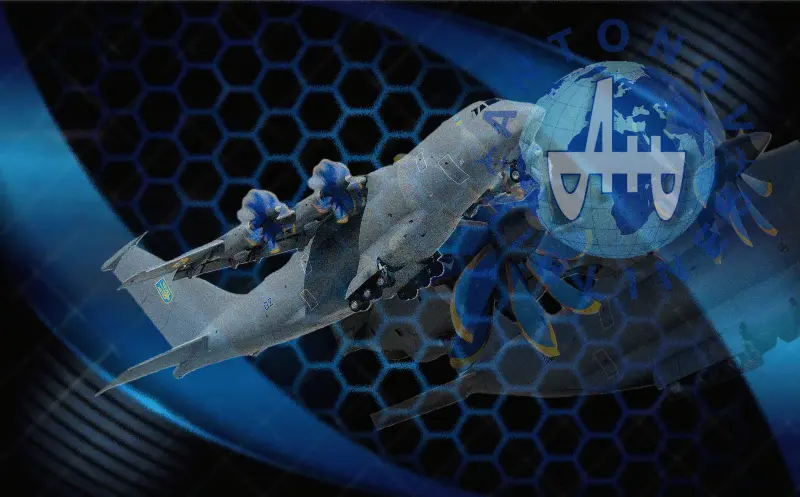
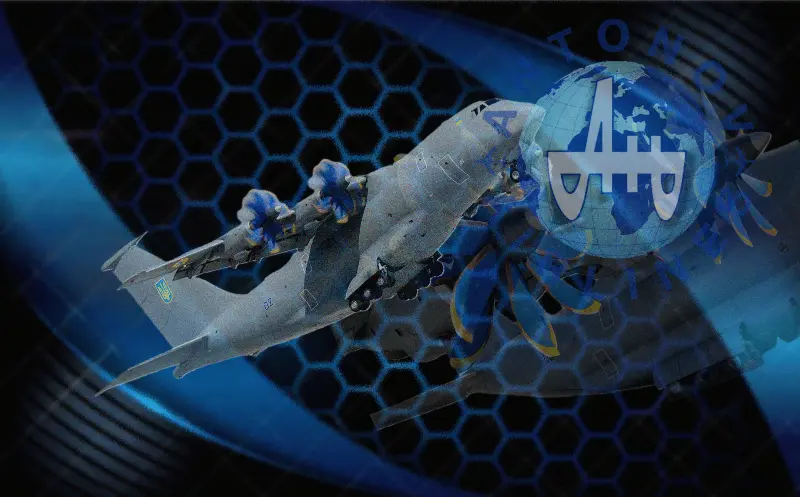
The Antonov An-70 (Ukrainian: Антонов Ан-70) is a four-engine medium-range transport aircraft, and the first aircraft to take flight powered only by propfan engines. It was developed in the late 1980s by the Antonov Design Bureau to replace the obsolete An-12 military transport aircraft. The maiden flight of the first prototype took place in December 1994 in Kyiv, now independent Ukraine. Within months the prototype had suffered a mid-air collision. A second airframe was produced to allow the flight-test programme to proceed. Both prototypes were produced by the Kyiv Aircraft Production Plant.
Following the dissolution of the Soviet Union in the early 1990s, the programme became a joint development between Russia and Ukraine. The former compounded the issue of a reduced market with its intermittent commitment to the project. Repeated attempts to start production have had limited success. Western European countries, including Germany, at one stage assessed the aircraft for procurement, but many later decided against it.
Development
Origins and early testing history
The origins of the An-70 can be traced back to the mid-1970s, when the Antonov Design Bureau began preliminary design work on a successor for the An-12 four-engine turboprop aircraft.[1] The Soviet Armed Forces, by the 1980s, were looking for a replacement for the An-12 and a complement to the Ilyushin Il-76 four-engine jet transporter; in 1987, the Ministry of Defence, with a new emphasis on air mobility, specified an aircraft with a quick loading time, the ability to operate from short unprepared airfields, could carry up to 300 troops, and have good operating economy.[2][3][4] The initial contract for work on the An-70 was concluded in May 1989;[5] Antonov began advanced design work on the new aircraft during the same year.[3] After the collapse of the Soviet Union, in June 1993, the Russian and Ukrainian governments agreed to jointly develop the An-70, with 80 percent of the funding expected to come from Russia.[6] The following year, twenty companies and organisations from the former Soviet Union agreed to jointly develop, market and support the aircraft.