History
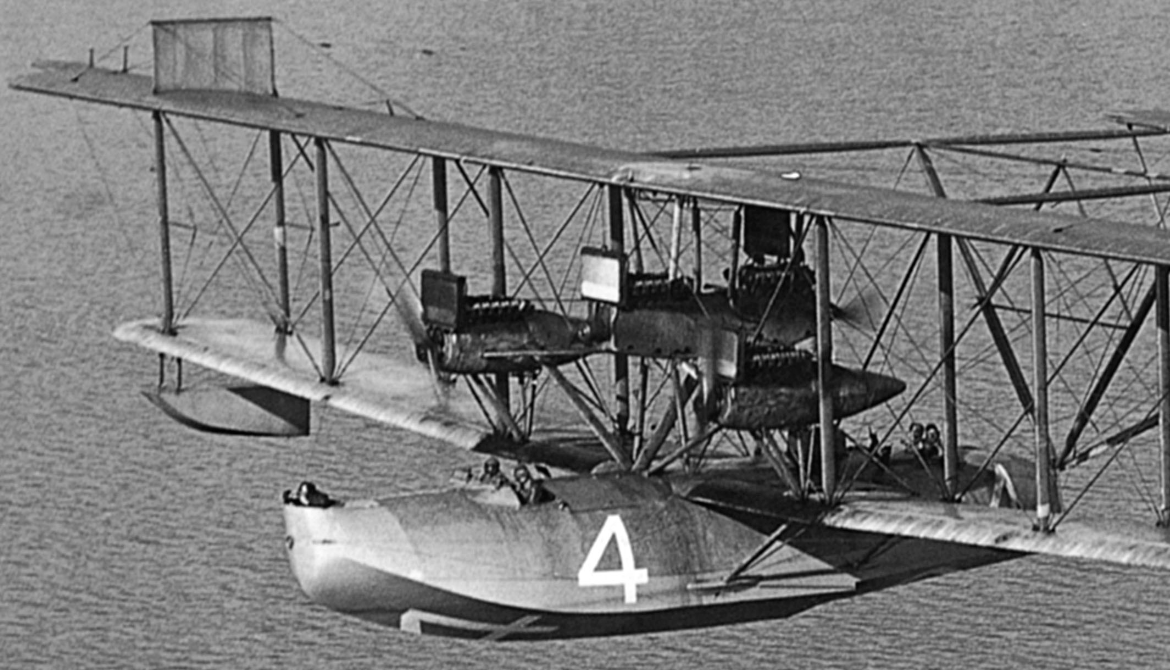
The Martin JRM Mars is a retired large, four-engined cargo transport flying boat designed and built by the Martin Company for the United States Navy (US Navy). It was the largest Allied flying boat to enter production during World War II, although only seven were completed.[2]
The Mars was developed during the late 1930s and early 1940s as a scaled up derivative of the PBM Mariner patrol bomber, internally designated Model 170. Under contract from the US Navy, an initial prototype, the XPB2M-1 Mars, performed its maiden flight on 23 June 1942. While originally intended to be adopted as a long-range ocean patrol flying boat, as the conflict progressed, the Mars was reoriented towards the long-range transport mission, thus redesignated XPB2M-1R. The flying boat commenced ferrying cargo to Hawaii and the Pacific Islands on 23 January 1944. While a batch of 20 Mars was at one point on order for the US Navy, the service opted to curtail the order to seven aircraft following the end of end of World War II. An envisioned civil airliner variant, Model 170-24A, was never put into production.
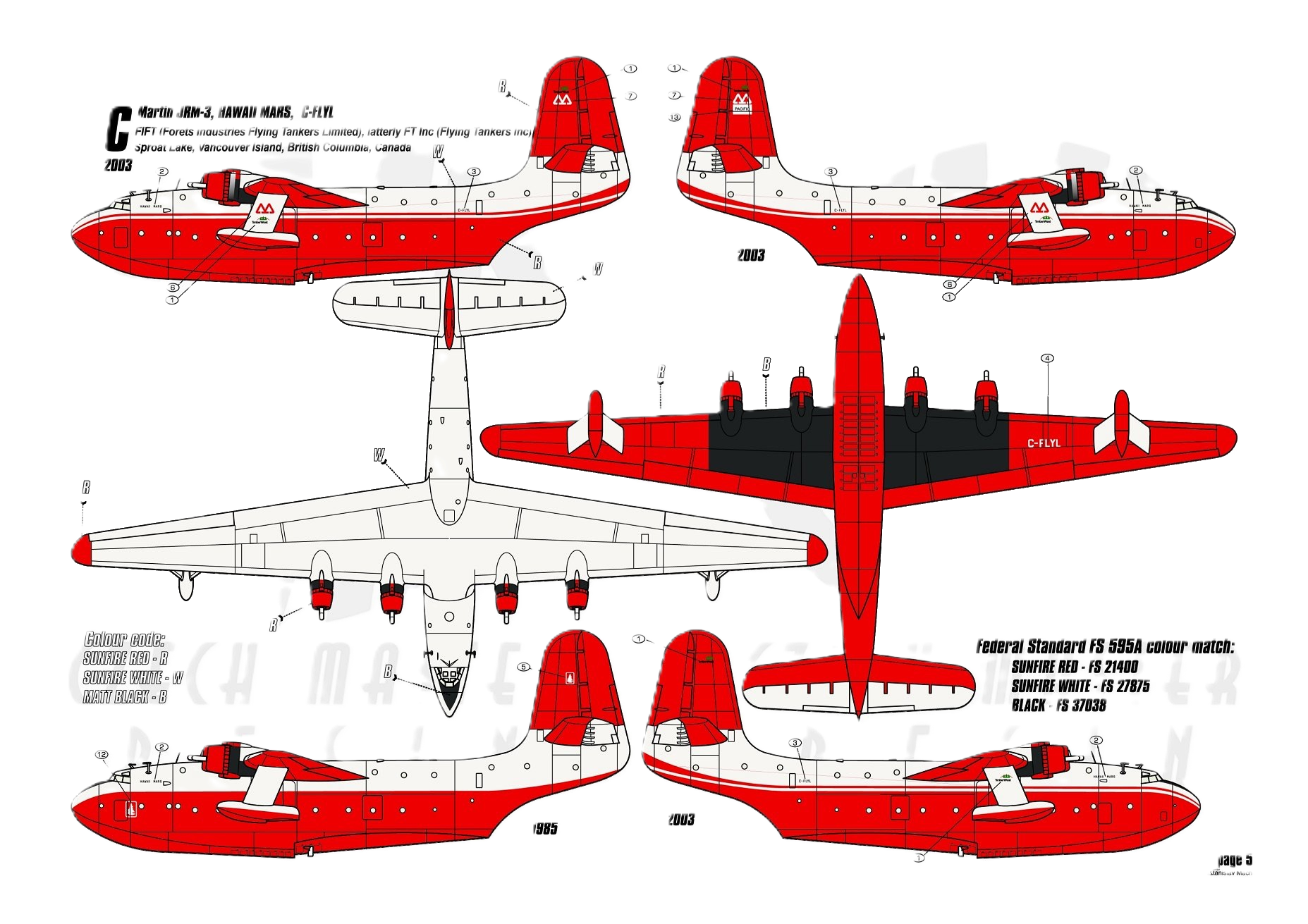
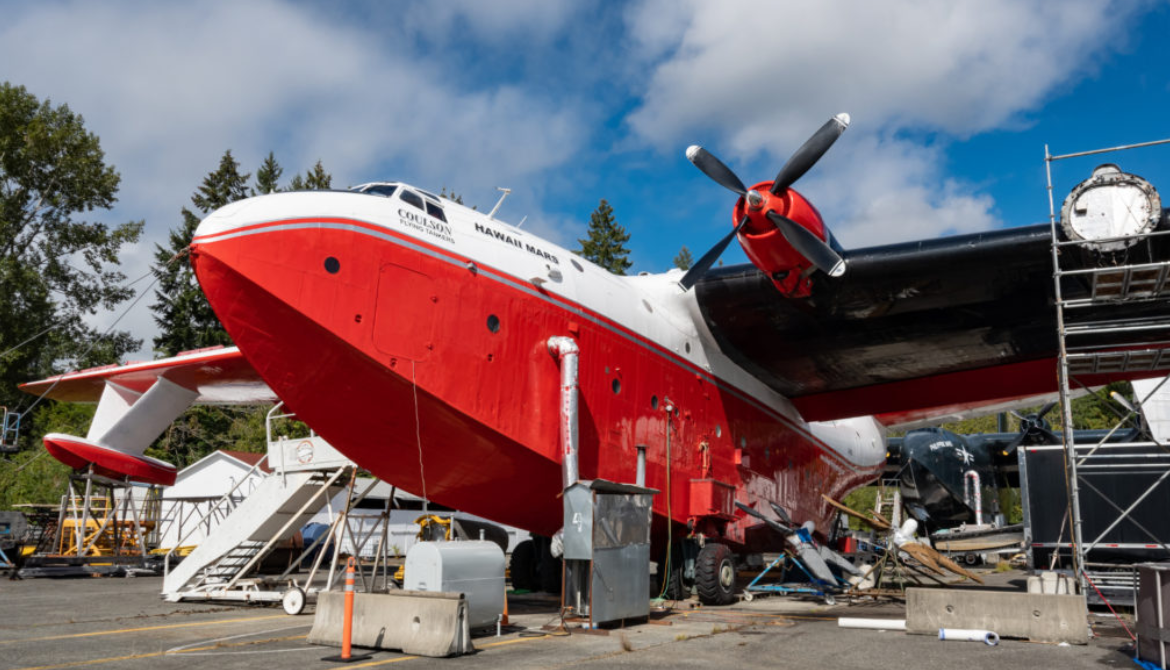
Up until 1956, the US Navy typically used the type on San Francisco–Honolulu route, after which it was withdrawn from service and stored. Thereafter, four of the surviving Mars were converted for civilian use as firefighting water bombers. Two of the aircraft were based at Sproat Lake, just outside of Port Alberni, British Columbia, Canada, one of which, Hawaii Mars, remained in operation until 2016, after which it was preserved at the British Columbia Aviation Museum. The Philippine Mars is also to be permanently displayed at the Pima Air & Space Museum in Tucson, Arizona. No remaining examples are operational.